Vision

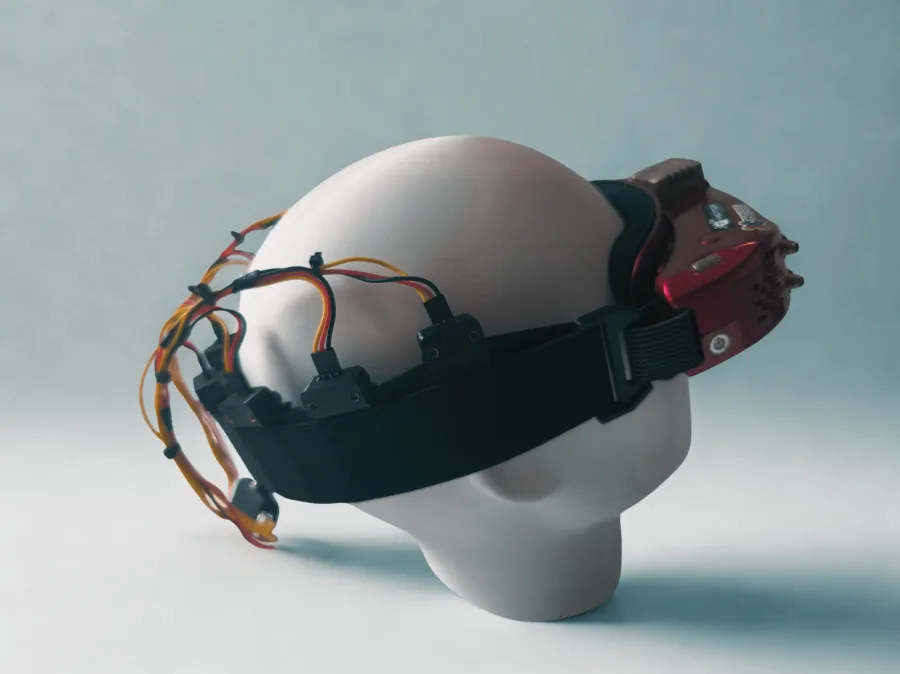
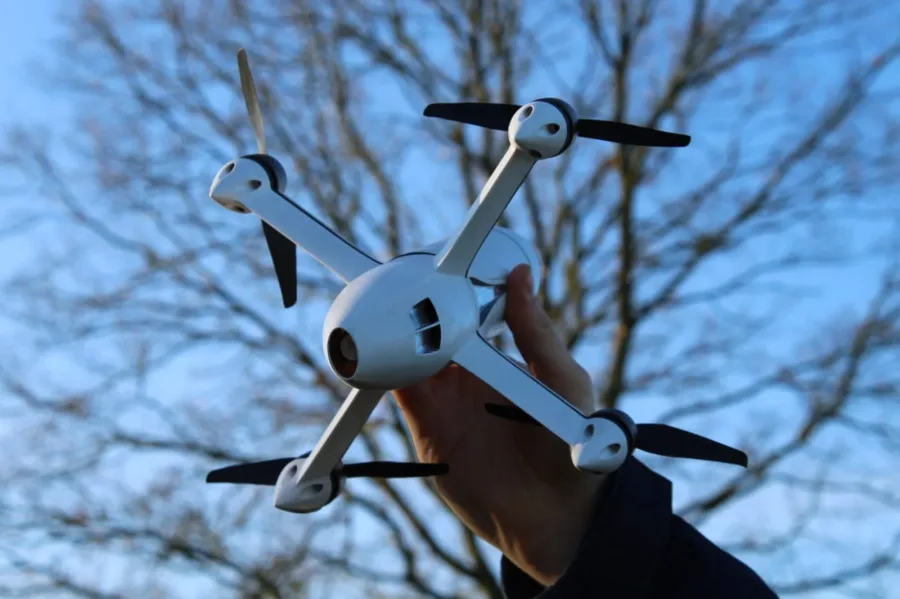
I want to contribute to a future where products are designed for long-term value instead of short-term replacement. I believe sustainability is not only about choosing better materials, but about designing products that people can keep, repair, and upgrade as their needs change. Heraclitus expressed with “Everything flows” (Heraclitus, n.d.). For me, this means that design should not be static: it should be able to evolve with the user and remain adaptable over time just like everything else. My personal motivation comes from being drawn to high-quality, well-made products and from enjoying the process of understanding how systems work through making and testing. This is also reflected in my experience with FPV drones, where technology develops quickly and reliability matters. In this context, modularity and maintainability are essential: parts break, systems improve, and users constantly adapt their setup. This has shaped my belief that modular design is not only a technical solution, but also a sustainable strategy, because it enables products to stay functional and relevant instead of becoming waste. I am especially interested in applying this mindset to fast-evolving high-tech fields, where complexity can easily lead to confusion, misuse, and early disposal. I want to design systems that are both technically innovative and intuitively understandable, where form and interaction clearly communicate how a product works, how it can be maintained, and how it can be upgraded. In my vision, modularity should not be hidden.It should be visible and logical, so users feel confident interacting with and taking care of the product. I want to learn how to design high-tech systems that stay intuitive, trustworthy, and adaptable in fast-changing environments. I develop this by exploring the spatial experience of FPV drone operation: a context where users move quickly through complex and diverse surroundings and must make decisions under pressure. By designing, prototyping, and testing ways to improve orientation, clarity, and feedback in this setting, I want to strengthen my ability to translate technical possibilities into interaction that people can truly understand and rely on. Heraclitus. (n.d.). Heraclitus. In Wikiquote. Retrieved January 26, 2026, from en.wikiquote.org/wiki/Heraclitus

Rewinder: modular multitool gadget

Rewinder: modular multitool gadget

Professional Identity

I am an industrial designer and maker who brings a specific way of working to projects: I combine a hands-on technical mindset with strong collaboration skills, creative problem solving, and a focus on long-term value. I don’t only generate ideas, I translate them into prototypes, experiences, and product directions that can be tested, discussed, and improved. I've learned throughout my bachelor to make many mistakes as early as i can throughout the process to make the end result only better. In a project, I naturally create momentum by structuring complexity into clear steps. I prototype early to explore feasibility and interaction, and I use iteration to reduce uncertainty. I enjoy designing modular systems and technical concepts, but I always connect them to the user experience: how understandable it feels, how trustworthy it is, and how it performs in different scenarios. I am also a visually sensitive designer. I care about form, proportion, and detail, and I aim to make products that feel both functional and refined. For me, aesthetics are not decoration, but a way to communicate purpose, guide interaction, and create attachment over time. I bring value to teams through communication, ownership, and alignment. I work constructively with feedback, I’m comfortable collaborating across disciplines, and I often help by summarizing decisions, maintaining overview, keeping the team focused on what matters, and taking the lead where it is needed. I can bridge different perspectives by translating between user needs, design intent, and technical constraints, which helps multidisciplinary teams move faster and with more clarity. Beyond making and usability, I strategically consider the broader system around a design. I pay attention to stakeholder needs, feasibility, and what it would take for a concept to work in real life. This includes thinking about value creation: who benefits, why a user would choose it, and how a design could remain relevant over time through repair, upgrades, or modular product strategies. I am motivated by creating solutions that are not only innovative, but also realistic to implement and meaningful for people to adopt. I excel in projects that combine technology and interaction, especially when modularity, clarity, and long-term use matter. I am especially strong in projects where a team needs both creativity and realization: exploring new directions, making them tangible fast, and shaping them into a product that feels usable, desirable, and well-built. I am satisfied when a design is not only finished, but proven: when it works reliably, when users understand it without long explanations, when the form and interaction feel coherent, and when the concept has a clear reason to exist in the real world. A weakness I am mindful of is that my curiosity can lead to exploring too many directions early on. To avoid losing depth, I work with clear priorities, decision criteria, and consistent documentation. I also challenge myself to balance technical perfection with user value and simplicity, so the outcome stays focused and purposeful.

Pinch feedback mechanism (Design Actuated Systems)

Pinch feedback mechanism (Design Actuated Systems)

Past

During my first and second year of Industrial Design, my development was strongly shaped by making, technical exploration, and hands-on experimentation. I learned most effectively by visualizing ideas and quickly translating them into physical form. Prototyping felt intuitive to me, partly because I had already spent years building and experimenting in my dad’s shed. From an early age, making and testing ideas with my hands became a way to think, reflect, and even unwind, rather than just a means to produce outcomes. This mindset translated directly into my studies. I naturally gravitated toward Technology & Realization, where I could explore how abstract ideas become functional and tangible systems. I developed strong practical skills in 3D modeling with Fusion360, CNC machining, 3D printing, MIG welding, soldering, and laser engraving. Alongside physical making, I built a solid foundation in coding, ranging from website development in PHP to more advanced applications such as facial recognition using Python and C++. These competencies enabled me to prototype quickly and confidently, even when ideas initially felt complex or technically ambitious. Projects such as Rewinder clearly reflect this phase of my development. In this project, I designed and built a compact, spring-based battery concept and later applied similar principles when creating a modular, tool-less, repairable multitool. By prototyping early and repeatedly, I was able to test assumptions, identify weaknesses, and refine the design based on observed behavior rather than speculation. Through this process, I learned that making is not only about execution, but also a powerful form of design research that supports decision-making. Creativity and aesthetics played an important role alongside my technical focus. I never viewed design as merely making things function or look appealing, but as shaping how something is experienced and understood. Influenced by growing up with a father who is a sculptor, materiality and tactile qualities were always consciously part of my process. I experimented with texture, form, and material behavior to explore how these elements influence interaction. In the project Emit, for example, I drew inspiration from stones and erosion to design a caveman character whose appearance felt familiar and grounded, supporting both the narrative and the intended interaction. In group projects, my sketching and prototyping skills became an important tool for communication. Visualizing concepts helped translate abstract discussions into concrete decisions, allowing teams to align more quickly and iterate more effectively. This role strengthened my awareness of how making can support collaboration, not only individual exploration. Alongside making, I started developing skills within User & Society. I learned to apply methods such as interviews, questionnaires, in-the-wild testing, affinity diagramming, and personas to better understand user behavior. These methods became particularly valuable in Rewinder, where user testing directly influenced decisions about storage, key placement, and interaction. One insight that stood out was that several users preferred the winding key to be pre-attached rather than loose, which led to a concrete design change. Through projects like Emit, I also learned how designing for extreme users and characteristics can reveal insights that are often overlooked in conventional product design. My interest in Business & Entrepreneurship emerged during my first year, when I chose Introduction to Business Design as an elective. This course introduced me to strategic thinking and broader business trends, which I later expanded through Design Innovation Methods. I learned to work with tools such as the Business Model Canvas and PESTEL analysis, and to connect user insights to strategic decisions. Although my primary focus during this period remained on making and prototyping, these courses helped me understand how design decisions influence value creation and feasibility. Within Math, Data & Computing, I developed a foundation that supported both technical and interactive design. Courses such as Creative Programming, Making Sense of Sensors, and Foundations of Data Analytics taught me how to work with data, sensors, and computational logic. In projects like OWL-E, I experienced how programming and data directly influence interaction and system behavior. Later, in Design Actuated Experiences, I started exploring mechanical motion, torque, and efficiency more deliberately, realizing that validating movement through testing is as important as designing it. Looking back, my first two years were characterized by curiosity, experimentation, and a strong maker mindset. I built a broad and solid technical foundation and gained confidence in translating ideas into tangible outcomes. At the same time, I began to recognize the limitations of a primarily technical and intuitive approach. This growing awareness prepared me for a shift toward greater reflection, user perspective, and integration, which became increasingly important in the later stages of my bachelor.

Past picture

Present

I'm now in the third year of my study and I have just finished my internship. I see my internship experience as a period of learning how to work more consciously and reflectively as a designer. Earlier in my studies, my focus was mainly on technical exploration and making. During my internship, I learned that professional design practice also involves dealing with uncertainty, setting priorities, and collaborating effectively within a broader context. I became more aware of the importance of defining scope and knowing when to ask for feedback. Instead of trying to solve problems independently for too long, I learned to involve others earlier and to be more explicit about the type of input I needed. This shift helped me progress more efficiently and prevented me from getting stuck in one direction without validation. At the same time, I broadened my understanding across the different expertise areas. I gained insight into how sustainability, usability, and technical feasibility influence each other, and how many critical decisions are made early in the design process. This awareness shifted my focus from only developing solutions toward also considering how design can support informed and responsible decision-making. My technical skills continued to develop, but I started applying them more deliberately rather than automatically. I learned to combine making and technical exploration with reflection, feedback, and basic data-supported reasoning. Creativity also evolved in my process, becoming less about form alone and more about structuring information and making complex systems understandable. Overall, this phase marked a transition from being primarily a technically driven student toward becoming a more balanced industrial design student. I am now more aware of my role within a team, more comfortable working with uncertainty, and better able to connect my technical competencies with user experience and reflective practice. This forms a clear and necessary step toward my Final Bachelor Project.

Present picture

Future

In the final phase of my bachelor, I want to use the strengths I have developed in Technology & Realization to further strengthen my competencies in User & Society and Math, Data & Computing. Throughout my studies and internship, I have primarily learned through hands-on prototyping and technical exploration. In my Final Bachelor Project (FBP), I aim to build on this foundation by focusing more explicitly on how people experience, interpret, and rely on complex systems in real-world situations. For my FBP, I plan to work on a self-defined project that explores how spatial awareness and orientation can be improved in dynamic and fast-changing environments, with a specific focus on FPV drone operation. This direction was supported by positive feedback and a handshake agreement with Professor Debargha Dey from the Future Mobility Squad after pitching my concept on enhancing operator spatial awareness through multi-modal feedback. This confirmation allowed me to further develop my own project direction within the FBP framework. This focus directly aligns with my Professional Identity & Vision, in which I aim to design high-tech systems that remain intuitive, adaptable, and trustworthy in real use. By investigating how users perceive orientation, feedback, and control under pressure, I can translate my belief in long-term usability and adaptability into concrete design decisions. The FPV context provides a demanding environment in which clarity and responsibility in design are essential rather than optional. User & Society During the FBP, I will aim to conduct 15 user tests with RC operators to evaluate how different feedback modalities influence spatial awareness and control. The insights from these tests will be used to iteratively improve the interaction design, with design changes documented and justified based on observed user behavior. Math, Data & Computing Throughout the project, I will work with sensor data and basic performance metrics (such as response time, orientation accuracy, or error frequency) to support usability-related design decisions. By the end of the FBP, I will demonstrate how quantitative data can complement qualitative user insights in evaluating interaction concepts. Technology & Realization By the end of the FBP, I will design and realize a functional interactive prototype or installation that integrates multi-modal feedback (e.g. visual, auditory, or haptic), demonstrating technically robust implementation validated through iterative testing. I intend to integrate these learning goals into an interactive final installation, using my technical skills to make complex system behavior tangible and understandable. This approach reflects my way of working: combining hands-on technical exploration with user-centered evaluation to make abstract systems readable and meaningful. Building on my internship experience, I also want to reflect on how this concept could be developed into a realistic product direction. This includes exploring a strategic and business perspective by analyzing how existing solutions and competitors address similar challenges, and by identifying opportunities to improve adaptability and flexibility through iterative, user-centered testing. Creativity and aesthetics remain integral to my process. I want to consciously use form, visual clarity, and material expression to support affordance and understanding, and to create a setup that is not only technically sound but also clear, engaging, and adaptable. Ultimately, I aim to work toward a more universal design that can support different types of drone operators and a variety of drone systems.

Future picture

Technology & Realization

Technology & Realization is about turning ideas into tangible, working systems. It involves understanding materials, mechanics, electronics, and software, and using prototyping to explore, test, and refine concepts. During my first years of Industrial Design, I mainly developed this expertise area through hands-on making. I built a strong technical foundation in 3D modeling, machining, rapid prototyping, and coding, and used these skills to quickly turn ideas into functional prototypes. Projects like Rewinder allowed me to explore ambitious technical concepts and learn how iterative prototyping reveals both opportunities and limitations early on. During my internship, this expertise area shifted from product-focused realization toward supporting decision-making at a process level. Although I worked less on detailed CAD modeling than initially planned, I developed technical tools to analyze and compare sustainability-related choices, such as material impact and manufacturing considerations. This taught me that technical skills are not only useful for building products, but also for creating systems and tools that help others make better design decisions earlier in the process.

Design Actuated Systems

Design Actuated Systems

Creativity & Aesthetics

Creativity & Aesthetics focus on how ideas are generated, visualized, and communicated through form, material, and interaction. It is about shaping experiences that feel intuitive and meaningful. In my earlier projects, creativity played a large role in form-giving, material exploration, and visual storytelling. Influenced by a sculptural background, I explored how shape, texture, and references from nature can make designs feel familiar and understandable, as seen in projects like Emit. Sketching and prototyping helped me communicate ideas within teams and make abstract concepts concrete. During my internship, creativity took on a different role. Rather than shaping product form, it became about structuring information, visualizing complex processes, and designing clear and usable templates. I learned that creativity is not limited to aesthetics, but is equally important in visualizing abstract topics such as sustainability understandable and actionable for others.

Exploratory Sketching

Exploratory Sketching

User & Society

User & Society is about understanding people, their behavior, and the broader context in which products exist. It involves designing with empathy and validating assumptions through user research and testing. Throughout my bachelor, I developed experience with user-centered methods such as interviews, questionnaires, in-the-wild testing, affinity diagramming, and personas. In projects like Rewinder, these methods directly influenced design decisions, while in Emit, designing for extreme users helped uncover deeper insights. During my internship, my understanding of User & Society broadened further. Instead of focusing only on end users or clients, I explicitly considered additional stakeholders such as maintenance, repair, and end-of-life actors. This helped me see sustainability as a shared responsibility across a product’s life cycle and reinforced the importance of designing tools and processes that support different perspectives and needs.

CBL3 - New Futures Squad

CBL3 - New Futures Squad

Business & Entrepreneurship

Business & Entrepreneurship deal with value creation, feasibility, and strategic decision-making. It is about understanding how design fits within economic, organizational, and market contexts. My initial development in this area started through courses such as Introduction to Business Design and Design Innovation Methods, where I learned to use frameworks like the Business Model Canvas and PESTEL analysis. These courses helped me connect user insights to broader strategic considerations. During my internship, this expertise area became more concrete. I experienced how sustainability is often weighed against cost, performance, and client expectations in real projects. This pushed me to think strategically about how sustainability can support long-term value rather than being positioned as a separate goal. I learned to frame design decisions in ways that align with both sustainability ambitions and business realities.

Design Innovation Methods

Design Innovation Methods

Math, Data & Computing

Math, Data & Computing support logical reasoning, data-driven insight, and the integration of computation into interactive systems. These skills help evaluate, validate, and inform design decisions. During my bachelor, I built a foundation in programming, data analysis, and sensor-based interaction through courses such as Creative Programming, Making Sense of Sensors, and Foundations of Data Analytics. In projects like OWL-E, I learned how data and computation directly influence interaction and system behavior. During my internship, I further developed this expertise by working with quantitative tools to support sustainability-related decisions. I used data to compare material impact and experimented with web-based tools, APIs, and basic AI features. At the same time, I learned to critically assess the limitations of data and models, especially in early design phases where not everything can be measured or predicted accurately.

Project 2

Project 2